
Make upsells work for you business: When, What, and How to Offer
Many short-term rental companies have not yet monetised their additional sales. However, they increase revenue and have a real impact on organisation. Here is how to turn them into revenue, in three questions.
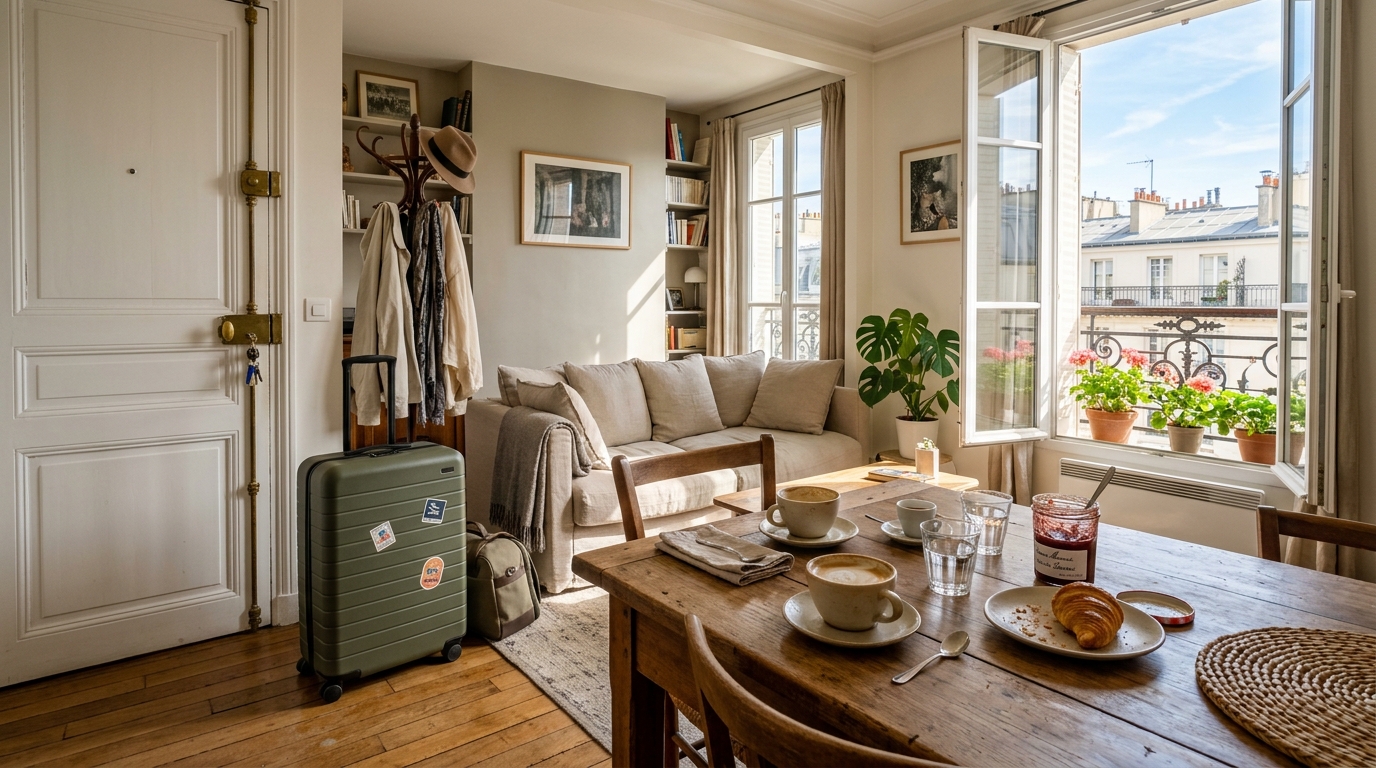
The request almost always arrives the same way. A traveler writes the day before their arrival: can they return the keys at 2:00 PM rather than 10:00 AM on the day of departure? The manager looks at their cleaning schedule, sees that the accommodation is not re-booked that night, and says yes. For free.
There is nothing abnormal about this. It is a commercial gesture, and the accommodation was vacant anyway. But repeated over a season, it is a service that displaces a cleaning shift, mobilises someone, and appears nowhere in the accounts.
Why this topic has become unavoidable
With regulatory pressure, rising supply, and platform commissions, nightly rates are being squeezed. Additional revenue is becoming one of the few margin levers we still truly control.
The good news is that the hotel industry is years ahead in this area, and its lessons translate well. With one nuance: in short-term rentals, there is no reception desk. Everything happens through messages exchanged with the traveler. This is where the three questions of this article come into play: when to offer, what to offer, and how to present it.
1. The timing: neither at booking nor at arrival
We tend to offer extras at two moments, which happen to be the two least favorable.
At booking. The traveler has just booked, they are happy, so we follow up with early arrival, baby kits, experiences. Except that at this stage, the trip is still an abstract idea. Platform benchmarks place conversion around 2% to 5%, except for last-minute bookings.
At arrival. The traveler often arrives tired from the journey, and we offer services just as they want to drop their bags. Same result: low conversion and added pressure.
Between the two, there is a well-identified window. The traveler enters a planning state 2 to 7 days before arrival: they are projecting, looking for what to do, where to eat, how to organise their stay. This is when they are receptive, specifically in the 24 to 72 hours before arrival, where the same benchmarks show conversion rising to 15% to 25%.
In summary, four moments, four results:
At booking: the traveler is happy, but the stay is still abstract. 2% to 5% conversion.
2 to 7 days before: they are planning and projecting. Conversion increases.
24 to 72 hours before: they are organising concretely. 15% to 25% conversion.
At arrival: tired, they want to settle in. Low conversion.
This varies depending on the destination, length of stay, or number of travellers. But overall, three reflexes help starting today.
Start 7 to 10 days before, not at booking.
Prioritise the evening. A message at the end of the day hits when the traveler has time to dream about their stay.
Don't oversaturate. Beyond three messages before arrival, total conversion drops.
Key takeaway. The right time is when the traveler has already started their trip in their mind.
2. The offer: three levels, one at a time
Knowing when to offer isn't very useful if you don't know what to offer. And the goal isn't to offer everything at once: an offering is built over time. The simplest way to navigate this is to start with what the traveler is looking for, from the most immediate to the most memorable.
Level 1: Comfort
What makes the stay more pleasant immediately: early arrival, late check-out, extra cleaning, baby kit. These are the easiest services to offer, and they convert well for little effort. This is where you start, and it's often what was already being given away for free.
Level 2: Practicality
Everything that makes the traveler's life easier and saves time: airport transfers, grocery delivery before arrival, childcare, a private chef. You move from a simple extra to a real service, which requires a reliable provider and a bit of organisation.
Level 3: Experience
What makes the stay memorable: guided tours, activities, excursions, access to a local gem they wouldn't find alone. This is the strongest level. Travel behaviour studies show that nearly one in two travellers now chooses where to stay based on the experiences available nearby, and that accommodation only accounts for about 30% of a trip's budget. Everything else happens outside the nightly stay.
It is also the most difficult level. It requires partners, organisation, and real local value to stand up against the big platforms. But this is where there is the most to build and a way to differentiate yourself.
The idea is therefore to move up one level at a time. Done well, this upselling can increase revenue per booking by 8% to 30%, without adding a single property.
3. The method: four benchmarks from purchasing behaviour
You can offer the right service at the right time and still be refused. The way you present it is likely what we work on the least. Research on purchasing behaviour provides four benchmarks that translate well to short-term rentals.
Comparison pricing
An extra is never judged in isolation. A late check-out at €40 may seem expensive. Next to an extra night at €150, much less so. The first price displayed serves as a benchmark. For an upgrade, it is often recommended to set it around 30% to 50% of the actual price difference between the two properties.
The right channel
A written proposal converts better than one made in person: the traveler can think about it, talk to their companion, and decline without having to say it to someone's face.
But not all written channels are equal. An upselling email is opened by 20% to 30% of recipients and quickly looks like advertising. A WhatsApp message is opened in almost all cases and reads like a conversation. This is often where conversion is best, provided two conditions are met: an identified professional number and not overusing it.
The number of options
Too much choice, and no one chooses. Three well-selected proposals work better than a list of twelve services. Specifying which one is the "most popular" really helps because it removes much of the decision-making work.
Projection
A traveler buys a moment more than a service. "Late check-out at 4:00 PM" is an invoice line. "Enjoy one last morning without having to rush" is already an image in their head. The difference is subtle, yet it matters.
If all this carries so much weight in our profession, it's because a leisure stay remains an emotional decision. We don't reason the same way as we do for everyday purchases. We project, we imagine, and the way things are presented takes up much more space.
Where to start
Put together, the benchmarks from the three parts provide a starting point that takes an hour of work.
Choose two or three comfort services, the ones you already grant: late check-out, early arrival, mid-stay cleaning.
Set a price, and the rule that goes with it. For example: late check-out possible when the accommodation is not re-booked the same evening. A pre-determined price is much less debated than an improvised price in conversation.
Write a single message, sent in the evening, two to three days before arrival, on the channel where you already communicate with the traveler. Three options at most, one marked as the most requested, each phrased as a moment rather than a price line.
Plan the next steps for the team. A sold service becomes a task, with a time and a person. If the cleaning team isn't notified of the 4:00 PM departure, the sale costs more than it brings in.
Review after a month how many travellers accepted, and which service sells best. This will tell you when to move to the next level.
A traveler's budget goes far beyond the price of the night. It remains to be decided how far we accompany them. Everyone has their own strategy and pace.
And in smartiz? Services are offered in the WhatsApp conversation and in the digital guest welcome book at the chosen time. The traveler books and pays from their phone, and the related task is created for the team. For our clients, 95% of messages and tasks are handled without human intervention, for less than 10 minutes of work per stay.