
The Death of the Chatbot and the Rise of the Orchestration Layer
The End of the Conversational Interface
We have spent the last few years trapped in a dialogue with machines. We prompt, we refine, we copy-paste, and we validate. This 'Copilot' model was a necessary transition phase, a way for us to build trust with systems that were previously unpredictable. But as of March 2026, that phase is officially over.
On March 4, OpenAI released GPT-5.4 (https://kersai.com/ai-breakthroughs-in-2026-march-update/), and the benchmark results represent a fundamental shift: it is the first AI model to surpass human performance on real-world desktop task benchmarks. This isn't about passing a Bar exam or writing a poem; it is about the ability to navigate a file system, use a browser, and manipulate legacy software as effectively as a human operator.
When a machine can use a computer better than a person can, the 'chat' interface becomes a bottleneck. We are moving from AI as a consultant to AI as a workforce.
The Reshaping of the Professional Identity
There is a persistent myth that AI will simply replace jobs in a linear fashion. The reality is more complex and, frankly, more interesting. According to BCG’s latest microeconomic modeling (https://www.bcg.com/publications/2026/ai-will-reshape-more-jobs-than-it-replaces), over 50% to 55% of jobs in the US will be reshaped by AI in the next three years, while only 10% to 15% are likely to be eliminated entirely.
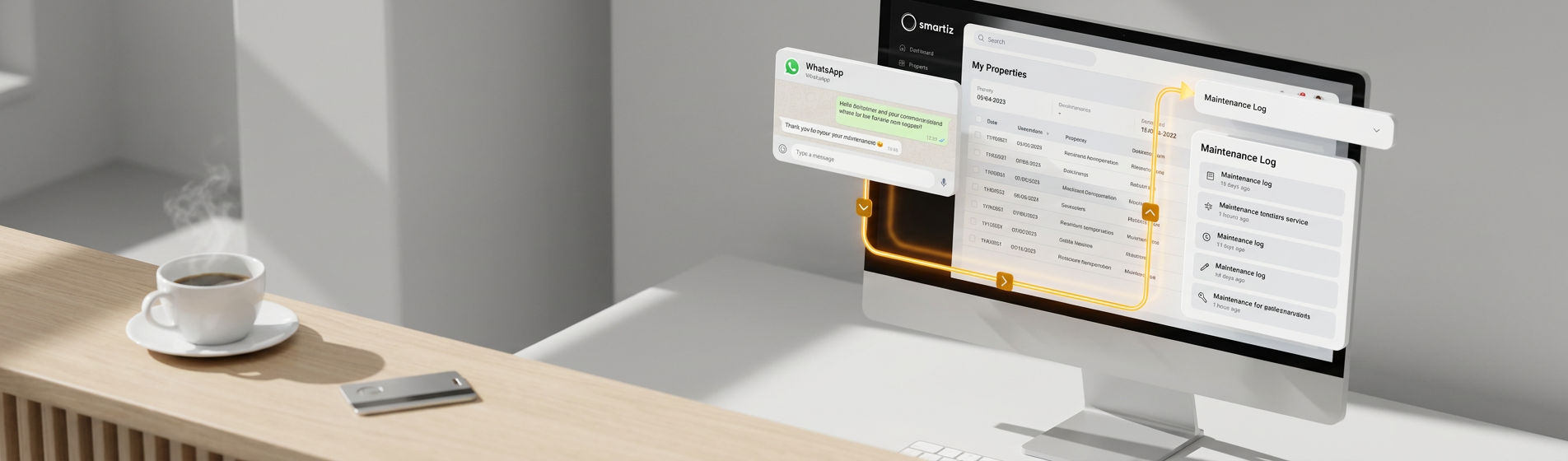
This 'reshaping' is where the friction lies. In my work at Smartiz, I see this daily in the hospitality sector. The job of a 'Front Desk Manager' or an 'Operations Lead' is currently 80% orchestration—moving data between a PMS, a WhatsApp thread, and a maintenance log. It is cognitive labor spent acting as a bridge between disconnected systems.
When the AI begins to operate these systems directly, the human role doesn't disappear; it elevates. We are seeing a massive shift toward what PwC calls the 'Human Skills' economy (https://www.pwc.com/gx/en/news-room/press-releases/2026/pwc-2026-ai-jobs-barometer.html). Their 2026 Global AI Jobs Barometer highlights that the market is rewarding judgment, creativity, and leadership at an accelerating rate.
If the machine handles the execution, the human is finally free to handle the empathy. In hospitality, that means the difference between a staff member staring at a screen to check a guest in and a staff member looking the guest in the eye to ensure they feel welcome.
The Acceleration of Capability
One of the most dangerous traps for any leader right now is the belief that AI progress is plateauing. The [2026 AI Index Report from Stanford HAI](https://hai.stanford.edu/ai-index/2026-ai-index-report) proves the opposite: capability is accelerating. Performance on coding benchmarks like SWE-bench Verified has jumped from 60% to nearly 100% in a single year.
This acceleration means that the 'wait and see' approach is no longer a viable strategy. If your operational model relies on humans to act as the 'control loop'—the bridge that makes decisions and executes them across different apps—you are building on a foundation of sand.
At Smartiz, we built our AI-native operating system on the conviction that human-orchestrated operations do not scale. When a guest pings WhatsApp about a maintenance issue, the traditional path involves a human reading the message, opening a ticket, and notifying a technician. That is a 15-minute process prone to error and emotional fatigue. Our data shows that an AI-native OS can drive an [automation rate of over 95%](https://www.smartiz.ai), reducing operator intervention to less than 15 minutes per entire stay.
Moving Beyond the Copilot
I have always been a vocal critic of the 'Copilot' narrative for industrial-scale operations. A copilot implies that the human must remain in the pilot’s seat, managing every turn. But in a world where model updates are happening every 72 hours, the human becomes the bottleneck.
We are seeing the rise of the 'Agentic Enterprise.' As Gravitee’s 2026 security report (https://www.gravitee.io/state-of-ai-agent-security) notes, the estate of AI agents in large organizations has doubled in just four months. These aren't just chatbots; they are autonomous actors.
For the hospitality professional, this means moving away from 'Management' and toward 'Orchestration.' You are no longer managing people to do tasks; you are managing a system that executes those tasks. This requires a different kind of curiosity. It requires us to ask not 'How can AI help me do my work?' but 'What is the work that only I can do once the execution is handled?'
The Concrete Path Forward
This week, I challenge you to look at your most frequent operational workflows. Don't look for where you can add a chatbot. Look for where you are acting as a 'human API'—copying data from one place to another or making a routine decision that follows a clear set of rules.
That is where the orchestration layer belongs. The goal of technology has always been to remove the 'robotic' parts of human jobs so that we can thrive in the parts that require compassion and taste.
We are finally at the point where the technology is reliable enough to let us do exactly that. The 'last exam' for humanity isn't whether we can out-code the AI; it's whether we have the courage to hand over the controls and rediscover what it means to lead with empathy.